Mindful & Multicultural Counseling
  • Home
  • Meet Our Staff
    • Insurance and Fees
    • Approaches to Treatment
  • Book an Appointment
  • Specialties
    • Depression and Anxiety
    • Trauma
    • Healthy Habits
    • Addiction and Substance Use
    • DBT
    • Pregnancy and Postpartum
  • Events
  • Mindful Living Blog
  • Mindfulness and Yoga
  • Consultation with Dr. Edmond
  • Join our Team

Mindful Living

Nourishment During the Winter Season

12/17/2020

16 Comments

 
By Abby Fosco
Picture
www.pinterest.ph
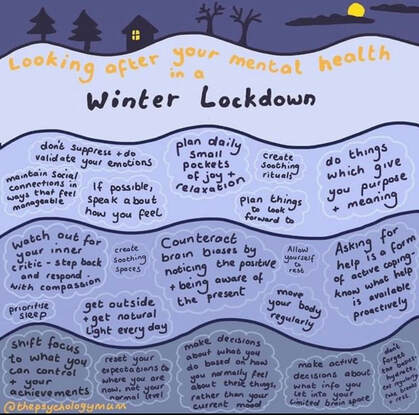
The winter season is upon us, and that calls for evaluating our strategies for nourishment and self-care during the colder months. For many of us, winter time may lead to the winter blues, which can definitely feel amplified with COVID-19 spikes and social distancing restrictions. With less time outside and more time indoors, it's important to find hobbies and coping skills that accommodate the change in season and the COVID-19 restrictions. 

​I interviewed our clinicians at MMC about their tips and strategies for finding nourishment throughout the winter season:
Marissa Mangual, MS, LPC
  • Practicing gratitude, especially at times of hopelessness, discontent, anxiety, and frustration due to COVID-19. Practicing gratitude daily can remind us of what we still have, and to appreciate what is. Gratitude has been shown to elicit positive emotions and bring a sense of ease during unpredictability and change.
  • Increasing mindfulness and pleasant experiences in the smaller things that bring a sense of relief, joy, or contentment. For example, settling into a cup of tea, starting a puzzle, and/or stepping outside in the sun. Can we use this time to develop a stronger sense of appreciation for the things we tend to skip by during our busy lives? 
  • Watching Christmas and holiday movies, and listening to holiday songs to instill cheer and holiday spirit (if you enjoy that). 
  • Thinking of new memories to make. Plan for changes in traditional holiday plans due to COVID-19 restrictions, and learn ways to cope with emotions that may come up because of those changes.
  • Plan/incorporate activities that increase positive emotions. It is okay not to feel as enthused or spirited; perhaps show compassion to those emotions and remind yourself “this will pass”.
  • ​Questions to ask yourself:  what are things that bring you hope? What are things to look forward to?
Kristine Aguilar, MSW, LCSW
  • Watching YouTube videos of tropical scenes (if you miss summer). 
  • Schedule Zoom dinners with friends and family. 
  • Due to the decrease in sunlight during the winter months, buying a sun lamp as a form of light therapy is something to consider.
  • I’ve started buying flowers for myself when I go to the grocery store; it’s something pretty and bright for me to have at home. 
  • Perhaps move furniture around to create some novelty. Also, a fun indoor hobby could be purchasing a seed growing kit and starting seeds in January/February, then planting the seeds in the spring. 
Picture
Nathalie Edmond, PsyD, RYT-500 | Founder and Director of MMC
  • Invest in a light box if you struggle with seasonal affective disorder. Perhaps meditate or use guided imagery when using the light box.
  • Try a new hobby or learn a new language this winter.
  • Follow a 21 day gratitude practice.
  • Discover something you love or appreciate about winter. ​
  • Let yourself slow down, rest more, nap more, and/or binge watch shows if that is what your nervous system wants. Our nervous systems originally had a rhythm of hibernating in the winter.
  • Think about winter as a time to plant seeds and regroup for the next season to come.​
  • Discover new recipes that feature your favorite foods of winter.​
  • Start your morning routine with a couple of rounds of breath of joy (energizing breath routine).​
  • Spending quality time with loved ones via Zoom or in a responsible, socially distanced way. Reconnect with someone you may have lost touch with. 
  • Come to our Winter Solstice Meditation Workshop on 12/21 via Zoom, or our  Mindfulness in Action Group that will start in January via Zoom (here is the link to register for these events).
Shashi Khanna, LCSW
  • Mindfulness, gratitude, exercise, and getting out in the sun as much as you can. 
  • Using positive affirmations can been helpful.
As we continue to live through these unprecedented times and each season looking a bit different than it ever has before, nourishment and self-care is more important than ever. If you want additional support throughout this winter season, Mindful and Multicultural Counseling in Ewing, NJ is here for you. Here is a link to our website's main page, and you can reach us by phone at (609) 403-6359 and by email at [email protected].
16 Comments

Managing Eating Disorders and Disordered Eating Around the Holidays:  Tips and Strategies

12/10/2020

8 Comments

 
By Marissa Mangual, MS, LPC
Picture
The holidays can be a wonderful time to connect with loved ones and celebrate. It can also create stress for those struggling with an eating disorder or disordered eating behaviors. Here are a few tips that may be useful during this holiday season:
  • Come up with a plan! Work with your therapist, dietician, and/or supportive individuals to identify foods you feel comfortable eating, and which “fear foods” you want to avoid or try. If you would feel more comfortable, offer to bring a dish that is already part of your meal plan. If you can plan your meal ahead of time, go for it! If you do not have a therapist or dietician, or are looking for more support with your recovery, I encourage you to check out the links at the end of this post.
  • Being around particular foods, or large quantities of food, may increase anxiety or fear for those in recovery. Identify coping skills ahead of time to help manage difficult emotions and negative thought patterns. A few examples include:
  1. Deep breathing techniques, such as finger breathing:  using your fingers to help track your breathing. With your hands in front of you, lift your pinky up slowly while inhaling, and on the exhale slowly put that finger back down. Move on to the next finger and repeat. Continue this exercise until you get through all ten fingers. 
  2. Distracting through friendly conversations with others. 
  3. Use tangible objects such as silly putty, grounding stones, or stress ball.
  4. Take a brisk walk, splash cold water on your hands and/or face, or hold icepack or ice.
  5. Engage in mental grounding/mindfulness by describing objects around the room to yourself, playing a categories game with yourself (i.e., name movies or celebrities starting with A and moving through the alphabet), or counting backwards starting from 100. 
  6. Play a game on your phone, write, bring a crosswords or sudoku.
  7. Listen to music that increases positive emotions or thoughts. 
  • ​Give yourself permission to eat your favorite foods without judgment and shame. Remind yourself that holiday foods aren’t “unhealthy.” Stay mindful and challenge your diet talk and inner critic. It is okay to enjoy foods that are satisfying!
  • ​Pre-mealtime mindfulness. Before settling in to eat, try pausing and taking a few deep breaths. Notice any negative thoughts or feelings that may arise. Using positive affirmations or compassionate self-talk can be useful to challenge those patterns in the moment. Affirmations may differ depending on what you are struggling with. Some include:
​“I will eat to nourish my body, mind, and soul”
“I am able to trust and listen to what my body needs”
“I deserve to eat”
“I am building a healthy relationship with food”
“I trust my body and hunger cues to tell me when I am satisfied”
  • ​Prepare mindful games or prompting questions to ask other friends and family during meal time. If you are around supportive people who are aware of your difficulties, think about talking with them before hand to come up with ideas. 
  • ​Post-meal plan. This time can be very distressing and induce feelings of guilt and shame, which could increase urges to compensate (i.e., purging, restricting food for the rest of the day, exercise/movement to “rid off” calories consumed, or eating more despite feelings of fullness). Some activities include watching engaging/comedic TV or videos, engaging in light conversation, playing a game or puzzle (on your phone or bring one in preparation), going for a light walk (if this is not a compensatory behavior), or listening to music.
  • ​Set boundaries. It is okay to ask others for what you may want or need to help support you around meals. Think about what conversations or topics may increase stress for you, and prepare to manage diet talk or comments about food.(i.e., “You’ve gained/lost weight,” “You look so healthy!,” “Holidays are ‘cheat’ days.”)  For some, it can be harmful and increase urges or feelings of shame. We cannot control what others say but we CAN control how we respond and how we use our voice. Some responses could include:
“Could we please talk about something other than calories, weight, or diets?”
“I’d rather not discuss what’s on my plate or how I look.”
“Let’s make this table a safe place with topics that we’re all comfortable with.”
“This food isn’t ‘bad,’ it’s succulent.” (Or herbal, flaky, aromatic. Fruity. Salty. Peppery. Any descriptive adjective will do.)
“I’d prefer not to talk about treatment or recovery.”
​Resource: https://www.emilyprogram.com/blog/to-those-fearing-the-thanksgiving-table/
  • Limit/block social media accounts with diet culture messages about the holidays.
  • Be compassionate towards yourself and create self-care activities! Enjoy yourself and remember you are worthy of recovery!
  • Create positive moments. Celebrate! The holidays don’t have to be all about food. Writing and/or expressing gratitude has been associated with feeling more positive emotions, dealing with adversity, building positive relationships to self and others, improving health, and appreciating and enjoying pleasant experiences.
​If you need additional support throughout the holiday season, our team here at Mindful and Multicultural Counseling is here for you. Click here to learn more about MMC’s clinicians and counseling services.
Websites to connect/gain further support:

https://www.eatingrecoverycenter.com/support-groups

https://business.facebook.com/bingeeatingconnection

https://www.nationaleatingdisorders.org/help-support/contact-helpline

https://edrcsv.org/get-help/support-groups/free-online-ed-and-body-image-support-groups/
8 Comments

    Mindful and Multicultural Counseling Clinical Team

    Therapists and psychologists committed to improving well being and mindful living.

    Archives

    April 2026
    March 2026
    February 2026
    September 2024
    August 2023
    March 2023
    October 2022
    September 2022
    June 2021
    March 2021
    January 2021
    December 2020
    November 2020
    October 2020
    September 2020
    August 2020
    July 2020
    June 2020
    May 2020
    April 2020
    March 2020
    February 2020
    January 2020
    December 2019
    October 2019

    Categories

    All
    Addiction
    Adhd
    Anxiety
    Assessment Bias
    Back To School
    Body-based Therapy Techniques
    Bravery
    Community Building
    Coronavirus
    Counseling
    Depression
    Eating Disorder
    Embodied Leadership
    Enneagram
    Fear
    Grounding Exercises For Anxiety
    Justice
    Meditation
    Mental Health
    Mindfulness
    Nervous System
    Nervous System Regulation
    Neuordivergence
    Neurodiversity
    Polyvagal Theory
    Radical Acceptance
    Somatic Exercises For Trauma
    Somatic Practices
    Tapping
    Teenagers
    Therapy
    Transitions
    Trauma-informed Therapy
    Yoga

    RSS Feed

May you sprinkle kindness where you go.   May you recognize how amazing you already are. 
Mindful and Multicultural Counseling   (609) 403-6359
20 Scotch Road, Suite E Ewing, NJ 08628
Proudly powered by Weebly
  • Home
  • Meet Our Staff
    • Insurance and Fees
    • Approaches to Treatment
  • Book an Appointment
  • Specialties
    • Depression and Anxiety
    • Trauma
    • Healthy Habits
    • Addiction and Substance Use
    • DBT
    • Pregnancy and Postpartum
  • Events
  • Mindful Living Blog
  • Mindfulness and Yoga
  • Consultation with Dr. Edmond
  • Join our Team