Mindful & Multicultural Counseling
  • Home
  • Meet Our Staff
    • Insurance and Fees
    • Approaches to Treatment
  • Book an Appointment
  • Specialties
    • Depression and Anxiety
    • Trauma
    • Healthy Habits
    • Addiction and Substance Use
    • DBT
    • Pregnancy and Postpartum
  • Mindful Living Blog
  • Mindfulness and Yoga
  • Consultation with Dr. Edmond
  • Join our Team

Mindful Living

Understanding OCD

8/1/2026

1 Comment

 
written by Abi Rayner, LSW
Do you ever have thoughts that scare you — thoughts you can't shake, that feel so contrary to who you are, but make you wonder if you're a bad person? If so, you may be experiencing OCD (Obsessive Compulsive Disorder). OCD is widely misunderstood. Far more than a quirk about neatness, it is a serious anxiety disorder driven by intrusive thoughts and compulsive behaviors. This article explains what OCD really is, describes its most common forms, outlines the evidence-based treatments that offer real relief, and offers guidance for those supporting a loved one with the condition.
 
What is OCD, really? 
The term “OCD” is often used casually to describe someone who is particular or tidy — "I'm so OCD," people say, referring to their neatness or how they like things "just so." But that is a stereotype, and a misleading one. Real OCD is far more distressing, disruptive, and complex than a preference for order. In fact, many people with OCD are so busy carrying out compulsions that their homes, cars, and lives are a mess.
 
OCD is a disorder where an intrusive thought triggers a persistent, overwhelming obsession — and the subject of that obsession can be almost anything. It could be a fear of getting sick, worry that someone you love will be harmed, or a nagging anxiety that you are a bad or unlikeable person. What defines OCD is not the content of the thought, but the cycle it sets in motion.

What are the most common types of OCD? 
OCD takes many forms. While the specific obsession varies from person to person, the underlying cycle — intrusive thought, anxiety, compulsion, temporary relief — remains the same across all types.
 
Harm OCD
Harm OCD centers on the fear that the sufferer has hurt someone, or that they want to. A person might feel compelled to constantly check with those around them to confirm they haven't caused harm. At its most extreme, this can mean returning to a bump in the road to check it wasn't a person, or even calling the police to confess to something that never happened.
 
Relationship OCD
Relationship OCD places the obsession on friendships or romantic partnerships. The fear is of not being liked, or that a perfectly happy relationship is somehow flawed. Compulsions might include constantly checking a phone for text replies or social media likes, or relentlessly analyzing interactions with a partner. When the discomfort becomes unbearable, a person might end a relationship — only to be flooded with regret.
 
Contamination OCD 
Contamination OCD is perhaps the best-known form, associated with excessive handwashing and fear of germs. But it can escalate far beyond what most people imagine. Those suffering from contamination OCD may wash their hands for so long that the household is constantly out of soap. They might be running up water bills by hundreds of dollars from showers that last for hours.
 
Why does carrying out a compulsion make OCD worse?
 
Performing a compulsion provides relief — but only temporarily. The relief fades quickly, and the urge returns stronger than before. Each time the compulsion is repeated, it reinforces the brain's belief that the feared outcome is real and that the compulsion is necessary to prevent it.
​

This is the part that many people, and especially parents–get wrong. If I child wants you to remove a toy she fears she will destroy. This seems the obvious route to the child finding comfort and most importantly, if it’s bedtime, going to sleep/
Unfortunately, accommodations of OCD, are like feeding a Mogwai after midnight: the Mogwai, a seemingly benign, cute, furry animal, becomes a gremlin–a bat-eared, sharp toothed creature bent on creating havoc. In other words, when OCD is accommodated it gains power. Understanding this cycle is the first step toward breaking it.
Picture

What does effective OCD treatment look like? 

OCD is highly treatable. Several science-backed approaches have strong evidence behind them, and most people see meaningful improvement when working with a trained mental health professional. Treatment is rarely a straight line, but with consistency and the right support, real progress is possible.
What is Exposure and Response Prevention (ERP), and how does it work? ERP is widely considered the gold-standard treatment for OCD. It works by gradually and deliberately exposing a person to the thoughts, images, or situations that trigger their obsessions — while supporting them in resisting the urge to carry out the compulsion. Over time, the brain learns that the feared outcome does not occur, and that the discomfort of not performing the compulsion is tolerable and temporary.
This can sound counterintuitive, even frightening. Why would anyone want to face the very thing that causes them so much distress? The answer is that avoidance and compulsions are what keep OCD alive. ERP interrupts the cycle at its core. Sessions typically begin with lower-anxiety situations and build gradually, always at a pace the individual can manage.
 
It is important to note that ERP is not about "thinking positively" or dismissing fears as irrational. It is a structured, evidence-based process that teaches the brain — through direct experience — that it can handle uncertainty without performing a ritual to make it go away.

How does Cognitive Behavioral Therapy (CBT) help with OCD?
​
CBT helps individuals recognize and challenge the thought patterns that fuel the OCD cycle. People with OCD often place enormous significance on intrusive thoughts — interpreting them as meaningful, dangerous, or revealing something true about their character. CBT helps clients understand that having an intrusive thought is not the same as wanting to act on it, and that the thought itself is not dangerous.
Through CBT, clients learn to identify cognitive distortions — such as catastrophizing, magical thinking, or inflated responsibility — and develop healthier, more balanced ways of responding to intrusive thoughts. Used alongside ERP, CBT can significantly accelerate progress.

What role do ACT and mindfulness play in treating OCD?
Acceptance and Commitment Therapy (ACT) takes a slightly different approach. Rather than trying to change or eliminate intrusive thoughts, ACT teaches individuals to accept that uncomfortable thoughts will arise — and to choose not to engage with them. The goal is to reduce the struggle with thoughts, not to win it.
Mindfulness supports this process by helping people observe their thoughts from a distance, rather than becoming fused with them. Regular mindfulness practice builds the awareness needed to notice when OCD is demanding attention, and creates a pause between thought and response. Over time, this reduces both the frequency and intensity of the OCD cycle.

Why is self-compassion an important part of recovery?
Self-compassion is often overlooked in OCD treatment, but it plays a vital supporting role. Many people with OCD carry significant shame — about their thoughts, their behaviors, and what they fear those things say about them. That shame can become a barrier to seeking help, staying in treatment, or believing that recovery is possible.

Learning to be kind to yourself while you practice new and difficult skills is not a soft add-on to treatment — it is what makes the harder work sustainable. A good therapist will weave self-compassion throughout the recovery process, helping clients understand that struggling with OCD is not a personal failing, and that they deserve support.
"A diagnosis of OCD is not a life sentence — it can be the beginning of freedom from pain, anxiety, shame, and the sense that something is fundamentally wrong with you."

How can you support someone with OCD? 
Supporting a loved one with OCD can be both emotionally demanding and deeply confusing. The instinct to help — to reassure, to accommodate, to remove the source of distress — is natural and comes from a place of love. But when it comes to OCD, many of the most instinctive responses can inadvertently make things worse.

Why is reassurance-giving harmful in OCD?
Reassurance is one of the most common ways loved ones try to help — and one of the most counterproductive. When someone with OCD asks "Are you sure I didn't hurt you?" or "Do you still love me?", answering with comfort feels kind in the moment. But reassurance functions as a compulsion by proxy: it provides temporary relief that reinforces the OCD cycle, rather than helping the person learn to tolerate uncertainty on their own.
 
This does not mean being cold or dismissive. It means gently declining to engage with the OCD, while still being warm and present with the person. A helpful response might be: "I love you, and I'm not going to answer that question because I know it won't actually help you." This takes practice, and it can feel cruel at first — but it is one of the most loving things a supporter can do.
 
What does helpful support actually look like?
Helpful support starts with education. Understanding how OCD works — the cycle of intrusion, obsession, compulsion, and temporary relief — helps loved ones respond with clarity rather than frustration. It also helps to understand that the person with OCD is not choosing their thoughts or behaviors, and that recovery takes time.
Practical support might include encouraging the person to seek professional help, attending family therapy sessions, and working with a therapist to understand how to respond to compulsions without accommodating them. It also means taking care of your own mental health. Supporting someone with OCD can be exhausting, and you cannot pour from an empty cup.

Finally, celebrate progress — however small. Recovery from OCD is not linear, and there will be setbacks. Recognizing and acknowledging each step forward, no matter how modest, builds the confidence and motivation needed to keep going.

When should you encourage someone to seek professional help?
If OCD is significantly interfering with a person's daily life — their work, relationships, sleep, or sense of self — it is time to seek professional support. OCD rarely improves on its own, and the longer it goes untreated, the more difficult it becomes to unravel. That said, the old adage: better late than never applies. Seek treatment as soon as possible to start pushing back against OCD and reclaim your life.
 
Is OCD a life sentence?
No. A diagnosis of OCD is not a life sentence — it can be the beginning of freedom from pain, anxiety, shame, and the sense that something is fundamentally wrong with you. Treatment is not always intuitive, and it asks people to do the opposite of what feels natural. But with the support of a skilled mental health professional, recovery is absolutely possible. If you recognize yourself or someone you love in this article, reaching out for help is a courageous and worthwhile step.  

You can schedule an appointment with one of our clinicians at Mindful and Multicultural Counseling in Ewing, NJ or virtually in New Jersey.
 
Abi Rayner is a Licensed Social Worker at Mindful and Multicultural Counseling who holds a Master's in Social Work from Rutgers University. A former journalist for The Times and the Financial Times, she is also the author of four picture books for children. Abi grew up in the UK and has lived in the US for half her life.


1 Comment

Embodied Bravery: Navigating Fear, Justice, and Self-Discovery in challenging times

2/19/2026

7 Comments

 
This exploration delves into the depths of what it means to embody bravery, drawing profound insights from the wisdom of two Black therapists and authors who have illuminated the Enneagram and its role in understanding how we navigate the world. This approach, inspired by works like "No Justice, No Peace" by Deborah Egerton and "The Enneagram for Black Liberation" by Chichi Agorom, offers a powerful framework for self-awareness, resilience, and collective liberation.

The Foundation: Understanding Fear and Our Protective Armor
Fear is a natural, biological response to threat, not a sign of weakness or moral failure. However, in systems that thrive on control, fear is intentionally cultivated. Authoritarian and fascist regimes, for instance, don't solely rely on force; they wield fear made ordinary, overwhelming, exhausting, and disengaging good people.

This chronic exposure to danger leads us to develop "armor" – patterns of behavior and personality traits that form as protection. The Enneagram offers a detailed map of these protective strategies, which can manifest in various ways:
  • Perfectionism: Striving for flawlessness.
  • Caregiving/People-Pleasing: Focusing on the needs of others.
  • Excellence/Achievement: Driven by accomplishment.
  • Knowledge/Intellectualism: Using understanding for security.
  • Withdrawal/Observation: Detaching to gain perspective.
  • Vigilance/Loyalty: Staying on guard and committed.
  • Adaptability/Enthusiasm: Seeking positive experiences.
  • Strength/Assertiveness: Projecting power.
  • Disappearance/Peacekeeping: Blending in or avoiding conflict.
  • Optimism/Joy-Seeking: Maintaining a positive outlook.
Beneath this armor lies a universal longing: to be safe, secure, seen, and loved unconditionally.
​
Justice, Peace, and the Indispensable Role of Truth
A crucial insight presented is that "peace is not the absence of conflict. Peace is the presence of justice." This redefines our understanding of tranquility, shifting it from a passive state to an active pursuit rooted in fairness. Furthermore, "justice always begins with truth."

When we experience fear, it is often a sign that we are paying attention to an unjust reality. Truth-telling is therefore presented not just as an act of honesty, but as "holy work." The video prompts introspection:
  • What are you afraid of right now?
  • What does your body know that your words haven't yet named?
  • What truth about your life have you avoided because it felt safer not to name it?
  • What has been normalized that is actually harming you?
Refusing to acknowledge these truths means choosing a lie that everything is fine, or that our struggles are simply a matter of being "tired" or "that's just how it is."

The Nature of Bravery: Beyond Fearlessness
Bravery is often misunderstood as the absence of fear, but the video clarifies that it is something far more nuanced and potent. True bravery is not about being fearless, constantly confronting, or sacrificing oneself to the point of breaking – these definitions often serve oppressive systems by ensuring resistance burns out.
Instead, bravery is revealed in:
  • Staying Human: Maintaining empathy and connection.
  • Discernment, Not Silence: Making conscious choices rather than passively staying quiet.
  • Connection, Not Isolation: Building and nurturing relationships.
  • Rest as Strategy: Recognizing the power of rejuvenation.
  • Care as Resistance: Nurturing oneself and others.
  • Telling Truths: Sharing information that sustains life.
  • Risking Vulnerability: Acting without guaranteed outcomes.
  • Holding Unpopular Opinions: Speaking truth to power when justice is at stake.
Bravery is often quiet, collective, and slow. It acknowledges fear not as a barrier, but as an emotion that can be present while still choosing connection and action.

Embodiment and Liberation
The journey toward bravery and justice is deeply embodied. Peace must be felt – in our shoulders, our breath, our nervous systems. If our bodies are perpetually braced and our spirits vigilant, justice has not truly reached us. Peace without embodiment remains mere rhetoric.

Liberation, therefore, is not about becoming someone new but about remembering our essential selves, shedding the armor and protections that no longer serve us. It involves:
  • Trusting Inner Wisdom: Believing that the answers we need reside within us, accessible through embodied listening.
  • Recognizing Our Worth: Understanding that worth is not transactional and that we belong, not because we earn it, but inherently.
  • Speaking Our Truth: Recognizing that silence in the face of harm is not peace, and our presence matters.
  • Challenging Survival Stories: Questioning narratives that say we must earn belonging, stay quiet, or carry burdens alone.
Finding Bravery in Action and Community
History offers countless examples of embodied bravery:
  • Acts of Resistance: In Nazi Germany, bravery was hiding neighbors, passing information, and teaching banned ideas – small, relational acts rooted in conscience.
  • Sustaining Community: During Apartheid, it meant protecting dignity, organizing quietly, and keeping culture alive.
  • Showing Up Anyway: In the Civil Rights Movement, bravery was facing terror, holding each other, singing to regulate fear, and allowing rest so the work could continue.
  • Modern Movements: The Black Lives Matter movement, fights for bodily autonomy, and advocacy for human rights worldwide demonstrate ongoing bravery in demanding change.
These acts remind us that bravery under oppressive systems is not about grand gestures alone but about sustaining ourselves, our communities, and our truth.
Personal Journeys of Courage
The video emphasizes that embracing our own journey involves discernment and courage:
  • Divorce as a Brave Choice: Letting go of relationships that no longer serve, without villainizing those involved, is an act of bravery. It’s about recognizing that sometimes bravery means leaving, and sometimes it means staying.
  • Ancestral Strength: Finding inspiration in the resilience and sacrifices of ancestors who navigated immense challenges.
  • Seeking New Opportunities: Embracing change and transformation, even when it brings uncertainty.
  • Rituals and Community: The power of ceremonies, like uncoupling rituals, to mark transitions and foster support.
  • Self-Compassion: Learning to receive care, attention, and pleasure without needing to earn it.
  • Sharing Wisdom: Understanding that insights and wisdom are meant to circulate and protect more than just ourselves.
Embracing Our Essence
​
Beneath the armor, we discover not chaos, but our essence. This essence holds courage that is wise, love that is discerning, and power that is relational. Hope is not passive; it is a practice we must cultivate daily.
Justice does not ask us to disappear. Peace does not ask us to endure endlessly. Faith does not ask us to override our bodies. By understanding our fears, acknowledging our armor, and embracing the truth of our experiences, we can step more fully into our embodied bravery, fostering resilience, justice, and liberation for ourselves and our communities.

Picture
7 Comments

Back to School Self Care for Parents and Teens

8/31/2020

 
Abby Fosco
Picture
Yulia Naumenko / Getty Images
With the new school year swiftly approaching, parents and students will still be facing unique ways of learning due to the COVID-19 pandemic. Depending on your school district, both hybrid and 100% virtual learning have been presented as the new normal for the 2020/2021 school year.  No one can tell you what is right for your family.
 
If in-person options are available in your school district, masks will be mandatory and social distancing will be implemented. Virtual learning won’t be new territory for parents and students, since schools switched to virtual learning in the spring of 2020 to finish out the 2019/2020 school year. However, if your children have the option to go back to school in person, social distancing protocols will be new territory. Either way, approaching a new school season when we’re still amidst a pandemic can induce stress and unease for many.
 
With all of this in mind, our clinicians here at Mindful and Multicultural Counseling in Ewing, NJ developed tips and strategies for parents as their children begin their back to school journeys:
  
Nathalie Edmond PsyD, RYT-500 | Founder and Director of MMC 

  • Create new expectations for this year based on current circumstances and not a typical year. Be willing to adapt as you learn new information.
 
  • Identify what is absolutely needed, what would be nice, and what is not worth the stress.
 
  • Prioritize your own emotional and self-care needs equally or even more than productivity.
 
  • Recognize our bodies and brains are under stress as we process everything going on around us. Remember to treat each other tenderly.
 
  • Expect mistakes and imperfection
 
  • Immerse one’s self in the arts, music, creativity, and physical exercise to tap into a different part of your brain.

 Kristine Aguilar, MSW, LCSW 

  • Create a daily schedule and stick to it. Routine, predictably, and structure reduces anxiety.

  • If possible, do school work someplace other than the bedroom and definitely not while in bed. Train your brain that the bed is for sleep to help promote adequate sleep.

  • Schedule 15-20 minute breaks from school work/screen time every couple hours. Go outside. Move your body.

  • Get dressed each morning. Don’t stay in pajamas. Make your bed. This mentally prepares you to accomplish things for the day.
 
 Taryn Chase, MA, LPC, LCADC, NCC 

  • Consistency is key! Keep a routine even if it’s short and simple.
 
  • Recognize when you need to take a break and re-adjust your energy levels to get back to a place of comfort to resume previous activity
 
  • Be kind to one’s self
 
  • Communicate with teachers and don’t assume you have all the answers
 
 Lina Lewis-Arevalo MA, NCC, LPC, LCADC 

  • Make friends with humor. It has a positive impact on mood, allows us to revisit and reset from an awkward moment, and when used appropriately, helps to bring people together.

Nadira Keaton, MS, LPC, LCADC, ACS, NCC 

  • Schedule time for physical activity daily. Whenever possible, go outside and soak in the sun!
 
Marissa Mangual MS, LPC, NCC 

  • [Having] open communication with children to discuss how these transitions are impacting them, or perhaps letting them know it’s okay or validating what they are experiencing.
 
  • Parents [being mindful to avoid] stress and tension being projected/displaced on to their children.
 
  • [Finding] balance in what is discussed in the home so stress is reduced.
 
  • [Finding ways] to cope with unpredictability in order to prevent or reduce anticipation anxiety.
 
 Shashi Khanna, MSW, LCSW 

  • [Practice] respect for everyone. People are reacting to COVID-19 and taking precautions in different ways. Teaching kids to be non-judgmental and respecting others’ situations and feelings is important.

Below is a video created by Dr. Nathalie Edmond for a local high school which addresses unique stressors we are experiencing as more discussions unfold about the Black Lives Matter movement and uncertainty persists around COVID-19. Tips for how we can reduce our vulnerability to stress are suggested.  Perhaps you and your child can watch it together to come up with a self-care plan.  If you need additional support throughout the year we are here for you.  Learn more about our team here at Mindful and Multicultural Counseling in Ewing, NJ. 

Other resources to support you:
  • Check out anti-racism resources.  No matter where you are on your journey there are ways to learn on your own as well as virtual spaces.
  • Listen to a guided meditation.  The one included here is a self care meditation centering Black, Indigenous and People of Color (BIPOC).
  • Check out other videos on our youtube channel to help you radically accept your current situation, cope with grief and loss, and learn more about how your brain responds to stress.  

Lean into the places that scare you

8/17/2020

 
Emily Suzuki, MA
Picture
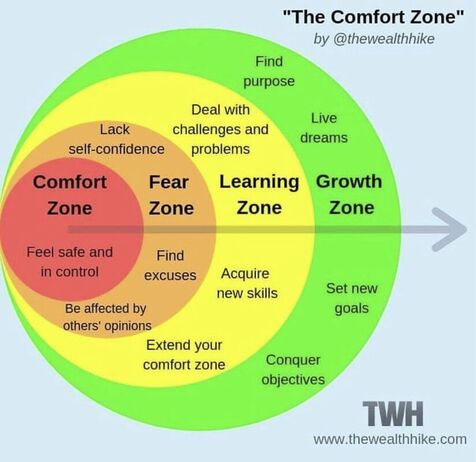
Fear is a familiar presence in therapy. Therapy is an invitation to explore our growing edges, the places that feel uncomfortable and scary. Often, that’s where our work begins and where we find the greatest growth.
 
Exploring fear is in the very DNA of the therapeutic relationship. Fear comes up often in therapy, and is present even before we seek out and take what we sometimes perceive as a risk, in asking for support. When we begin working with a therapist, someone who is initially a complete stranger, we may at first be guarded and protective of opening up and being vulnerable. Naturally, a dose of fear shows up to help us assess whether or not the person and relationship is safe and can be trusted.
 
As we build a relationship of trust, in which the therapist offers the reassurance that their support is rooted in compassion, non-judgement, deep and active listening, clients begin to feel safer. Within the net of safety and trust, client and therapist can begin to explore the layers of fear that may be showing up, both in the therapeutic relationship and in the client’s life.
 
Fear is an essential survival response to physical and emotional danger. When we experience a threat, our brains are wired to act in self-protection. This process has served us as far back as our ancestors, who had to navigate much greater physical threats.  Their survival level instincts turned on in the face of serious danger without so much of a thought, and their survival supported the evolution that led to our being.  Check out video about our triune brain by Dr. Nathalie Edmond at the end.
 
In our modern world, we may not be dodging tigers or samurais like our ancestors, but none the less, there is plenty of ways to feel unsafe in our society. While fear is a universal human emotion, each individual’s experience of it and relationship with it varies greatly. The intersections of one’s social location, identification with race, class, gender, sexual orientation, and ability, shapes our experience and threat to one’s safety. For those whose identities intersect marginalized groups, fear is a lived experience in a wholly different way than it is for those in the dominant groups. The insidiousness of systemic racism and white supremacy, is a system of power that is rooted in fear, in which police brutality is an everyday danger to those who are BIPOC (black, indigenous and people of color) and oppressed, and as a result creates and breeds more fear.
 
Fear shows up in so many ways, and can be a response to even small or imagined threats. Our nervous system kicks in with a fight-flight-or freeze response, always in service of our protection. However, this process can become so sensitive that it can be activated in moments when it’s not helpful to run, fight or freeze, and when turning towards and engaging whatever feels scary is more purposeful.
 
This is a place where we can develop a deeper understanding of our fear. Turning our attention inward and towards the fear, we can start to ask questions, and learn more about it. What is it truly afraid of? When is it showing up and getting in the way? How is it perpetuating old patterns and habits of not engaging with ourselves and others? In what ways might it be creating more pain and suffering?
 
When we feel safely held within a therapeutic relationship, one that is built on trust and safety, we can begin the process of inviting our fear into the room with us. Through noticing and gaining greater awareness of our fear (mindfulness), we can then practice disrupting the moments when fear attempts to turn us away from the work we need to do and instead, learn when it’s okay to trust, and bravely, lean into it.  

Learn more about the therapists at Mindful and Multicultural Counseling can help you transform your fear.  Read more about us here. Give us a call to begin the healing journey.


What is Yoga?

7/27/2020

 
by Michelle Gerdes, RYT-200
Picture
Picture
​​I can’t remember exactly when I first heard the word “yoga” but it was probably sometime in college in the mid ‘90s. I wasn’t sure what it was all about but I recall being intrigued by something that seemed to be both a spiritual and physical practice. After buying “Yoga for Dummies” (yes, that’s an actual book) and flipping through it, the demands of school and life took over and my interest waned. It wasn’t until I was in my mid-30s that yoga called to me again, and this time I made room for it and its beautiful and bountiful gifts.
I was an editor in a busy and stressful New York City newsroom. I had just come out of my second postpartum depression, with the help of talk therapy and my incredibly supportive husband, and despite “having it all” on paper—prestigious job, nice house in the suburbs, two cars in the driveway, two healthy children, a loving partner—I felt as if something wasn’t right. I wasn’t happy. I wasn’t living my best life. I was living someone else’s idea of what a good life should be.
Sound familiar? It’s reported that about one-third of Americans are experiencing some type of emotional disturbance right now—especially amid Covid-19: depression, anxiety, extreme stress, and with that related conditions like insomnia, feelings of isolation, digestion issues, lack of patience or joy.
At this point I knew I needed to make a change but I had absolutely no idea what that change would look like. And stepping out of my comfort zone felt too scary. It was around this time that I noticed a yoga studio just a few miles from my house. The funny thing is I had passed it hundreds of times and didn’t realize it was there.

I signed up and as I settled in for my first class the teacher did her best to make me feel welcomed, but I’m an anxious person and, to be honest, that first class was an interesting combination of uncomfortable and magical. As I moved my body and felt my breath, the teacher encouraged us to be present in the moment and listen to and respect signals from our bodies. Through this breath, movement and listening I began to catch a glimpse of the peace and joy I had been missing and a true connection with myself. Over time, the discomfort began to melt away as I learned ways to calm my anxiety, trust myself, and recognize and celebrate my innate worth. The changes I needed to make began to become clear. The fear of stepping into my idea of a fulfilling life began to melt away. I discovered myself. I was there all along, but the gifts of yoga allowed me to uncover her and celebrate her! This is yoga.

Simply put, yoga means to “yoke,” as in to join together. We join movement with breath, we join the head with heart, and we join the body with spirit. If you can breathe you can practice yoga. Yoga isn’t about being able to touch your toes or stand on your head. It’s about exploring and practicing its many tools—including breath, movement, and meditation—to help you befriend yourself, your emotions and your nervous system. It provides practices and guideposts to help you lead your best life.
 
If you are looking for ways to spend more time in a state of wellbeing, if you are seeking tools to help you cope with stress, if you want to map out a route to leading a more fulfilling life, I invite you to join me for the four-week series Yoga for Emotional Wellbeing sponsored by Mindful and Multicultural Counseling in Ewing, NJ. This class will provide a safe space to explore various yoga tools and use them to befriend and join together your unique body, mind and spirit.  Find out more about yoga and mindfulness resources here.  Check out the intro video below with Dr. Nathalie Edmond and Michelle Gerdes or sample a beginner class.
 
Namaste!

    Mindful and Multicultural Counseling Clinical Team

    Therapists and psychologists committed to improving well being and mindful living.

    Archives

    August 2026
    April 2026
    March 2026
    February 2026
    September 2024
    August 2023
    March 2023
    October 2022
    September 2022
    June 2021
    March 2021
    January 2021
    December 2020
    November 2020
    October 2020
    September 2020
    August 2020
    July 2020
    June 2020
    May 2020
    April 2020
    March 2020
    February 2020
    January 2020
    December 2019
    October 2019

    Categories

    All
    Addiction
    Adhd
    Anxiety
    Assessment Bias
    Back To School
    Body-based Therapy Techniques
    Bravery
    Community Building
    Coronavirus
    Counseling
    Depression
    Eating Disorder
    Embodied Leadership
    Enneagram
    Fear
    Fears
    Grounding Exercises For Anxiety
    Justice
    Meditation
    Mental Health
    Mindfulness
    Nervous System
    Nervous System Regulation
    Neuordivergence
    Neurodiversity
    Obsessive Compulsive Disorder
    Ocd
    Polyvagal Theory
    Radical Acceptance
    Somatic Exercises For Trauma
    Somatic Practices
    Tapping
    Teenagers
    Therapy
    Transitions
    Trauma-informed Therapy
    Yoga

    RSS Feed

May you sprinkle kindness where you go.   May you recognize how amazing you already are. 
Mindful and Multicultural Counseling   (609) 403-6359
1901 N Olden Ave Ext, Suite 10 Ewing, NJ 08618
Proudly powered by Weebly
  • Home
  • Meet Our Staff
    • Insurance and Fees
    • Approaches to Treatment
  • Book an Appointment
  • Specialties
    • Depression and Anxiety
    • Trauma
    • Healthy Habits
    • Addiction and Substance Use
    • DBT
    • Pregnancy and Postpartum
  • Mindful Living Blog
  • Mindfulness and Yoga
  • Consultation with Dr. Edmond
  • Join our Team