|
By Ciera Cuevas, MA, LPC Dialectical Behavior Therapy (DBT) is an evidence-based treatment that was initially designed to help individuals with borderline personality disorder manage intense emotions and improve their relationships. Since then, it has proven effective in addressing a wide range of emotional and behavioral challenges. DBT comprises four core modules: mindfulness, distress tolerance, emotion regulation, and interpersonal effectiveness. 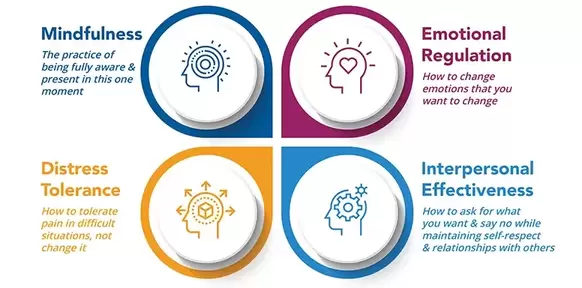 concept.paloaltou.edu In recent years, expressive art therapy has gained recognition as a powerful tool for promoting emotional growth and self-awareness. Expressive art therapy is based on the belief that artistic expression can foster healing, growth, and connection to self and others. These components complement DBT by providing a non-conventional and engaging approach to skill-building. By integrating various art forms such as painting, drawing, creative writing, music, and movement, expressive art therapy allows participants to explore their feelings, thoughts, and experiences in a safe and non-judgmental space. Its ability to tap into the creative essence of individuals makes it a unique and effective approach to teaching dialectical behavior skills.  www.emdria.org Conducting expressive art therapy within a group setting offers several advantages. Group dynamics encourage peer support, validation, and shared experiences, fostering a sense of belonging and reducing feelings of isolation. It creates an environment where participants can learn from one another, practice empathy, and develop valuable social skills. Overview The integration of expressive art therapy with dialectical behavior skills training has proven to be a promising approach for young adults in a group setting. By embracing creativity and self-expression, participants can enhance their emotional well-being, develop essential coping skills, and strengthen interpersonal relationships. The combination of DBT principles and art therapy offers a holistic and transformative experience, empowering young adults to navigate life’s challenges with greater resilience and self-awareness. Through creative expression, you not only gain valuable skills but also embark on a journey of self-discovery and personal growth. This fall 2023, Mindful Multicultural Counseling, located in Ewing, NJ, is offering a chance to participate in an introductory group experience. The group will further explore the integration of expressive art therapy as a method for learning and enhancing skills that support emotional regulation, interpersonal effectiveness, mindfulness, and distress tolerance among young adults. If you're interested in learning more and/or signing up for this group offering, please fill out the group interest form, linked here. There will be a free intro group session on Friday, 9/15 at 7:30pm at our office location, 20 Scotch Rd., Suite E., Ewing, NJ 08628. Questions about the group? Interested in therapy services at MMC? Feel free to reach out to [email protected]. 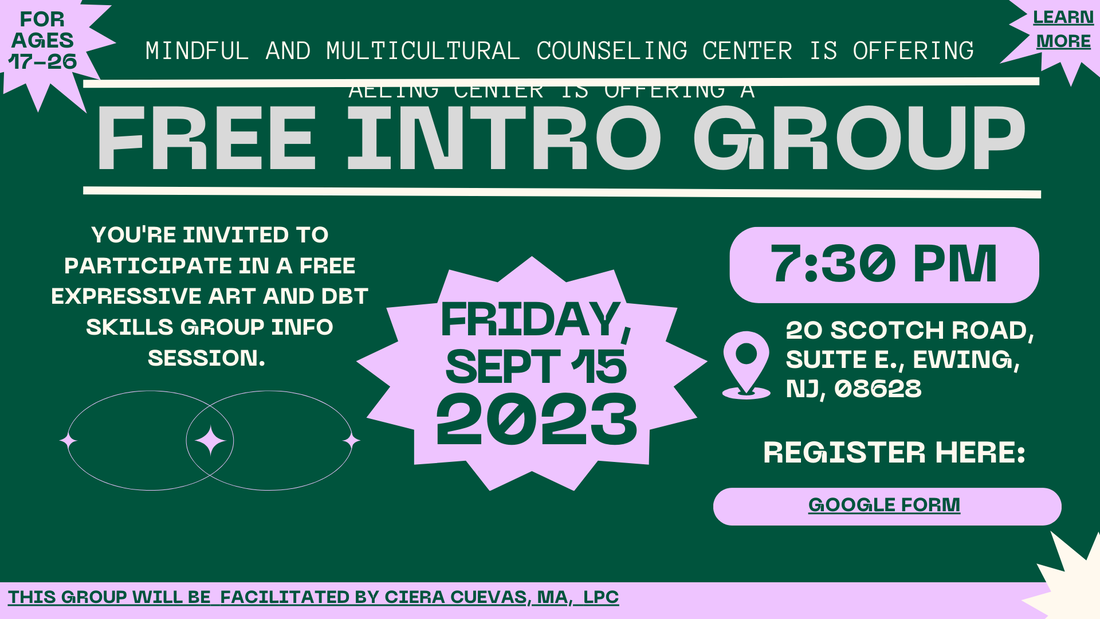
2 Comments
By AnnMarie Gray, MA, LAC 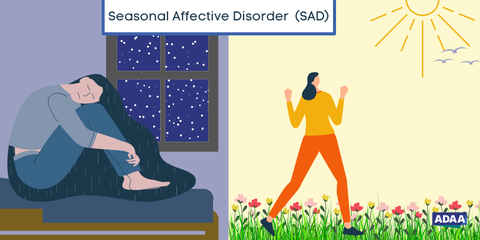 Image source: adaa.org Last week, Punxsutawney Phil, the groundhog, predicted six more weeks of winter for us. During this time of year, you may have felt the change of season and could be wondering why you feel sad during the winter. Some may call it SAD or seasonal affective disorder, commonly known as seasonal depression. It's less discussed but SAD can also occur during the warmer months. No matter which time of year you experience symptoms, SAD can alter your mood and day-to-day functioning. The winter blues include symptoms such as: low mood, little to no interest in normal activities, oversleeping, low energy levels, and trouble concentrating, to name a few. If you've noticed these symptoms affecting your mood and activity levels this winter, it would be a good idea to begin tracking these symptoms. If they're negatively impacting your life, you may want to seek a trained professional for help. 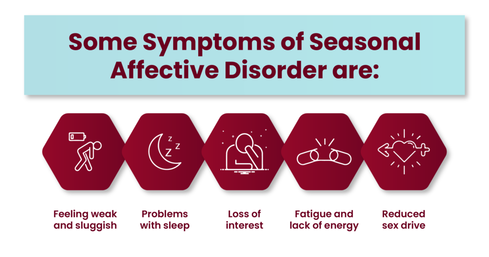 Image source: treatmentindiana.com A suggestion I give to my clients during these times is to start using a self-care checklist. At the beginning of the pandemic when everyone was locked in their homes and isolated from normal activities, I began to notice that some of us were less aware of what we needed to stay balanced and in-tune with ourselves. With this in mind, I had the idea to create a self-care checklist. This daily list includes basic tasks to feel healthy and incorporates the eight dimensions of wellness: Daily self care check list:
The goal of the eight dimensions is to find a balance that works for you. They don't all need to be given equal attention, but it helps you recognize what's important to you on your health and wellness journey. The eight dimensions are: emotional, physical, occupational, intellectual, financial, social, environmental, and spiritual. Everyones plan is individualized to their needs, and the goal should be to encourage a sense of wholeness for overall well-being. Some of us may need a reminder to eat, shower, or brush our teeth or to take five minutes a day to engage in mindfulness activities. Taking care of these basic needs is important and it might help us recognize where we're lacking. It shouldn’t be a reason to shame yourself—it's an opportunity to use that awareness to help create healthy patterns. When considering seasonal affective disorder, you may recognize that you're less motivated to talk to friends and would rather stay home and watch Netflix. You may notice yourself becoming more sedentary and slacking on moving your body. Your personal daily checklist will help you notice these patterns so you can take the steps you need to get back on track or even just create a plan for yourself. So, what is the next step if you notice you aren’t feeling like yourself? Therapy may be for you. When working with a therapist, they'll help you create a plan to reconnect to areas in your life that may currently feel blocked or neglected. Here at Mindfulness and Multicultural Counseling, we offer individual therapy, couples therapy, and family therapy depending on which therapist you choose to work with. We also provide extra support by offering yoga classes and guided meditations. Here is a link to MMC's Youtube page where you can find yoga class recordings and virtual guided meditations. We're here to support you and meet you at your starting point as you navigate your wellness journey. To learn more about Mindful and Multicultural Counseling (located in Ewing, NJ), please reach out to [email protected] or call our office number (609) 403-6359.
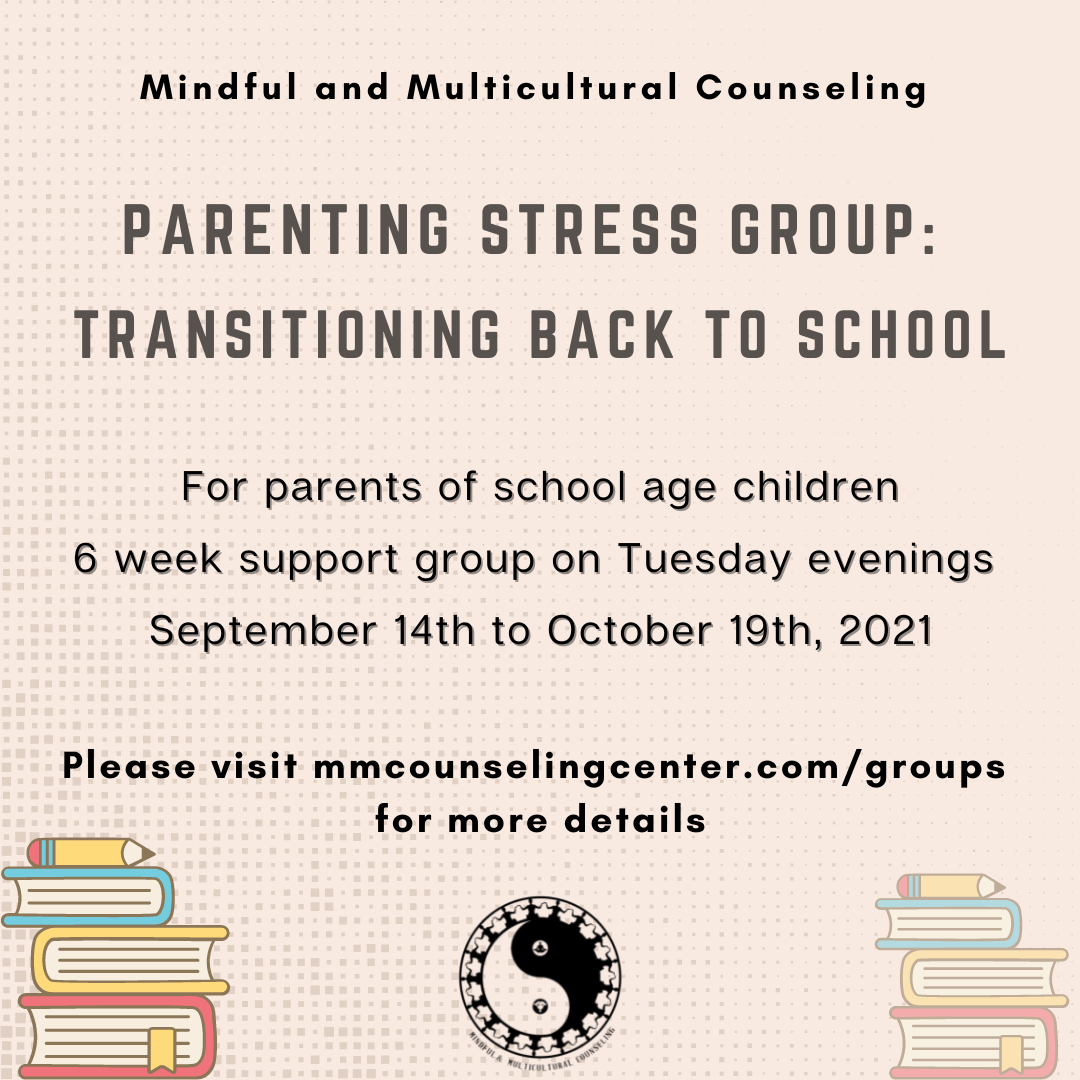
By Kafi Nsenkyire, LAC  Image credit: flexjobs.com Is a career change right for you? Are you unfulfilled? Uncertain? Afraid? Confused? Wavering? These are all normal feelings or emotions to experience when you are contemplating your next career move. Does the thought of doing something different make you anxious or uncomfortable? Perhaps there are little voices in your head that make you feel guilty for desiring a change. You may even feel embarrassed to admit you are seeking something different in your life. These reactions are typical and can be expected. If change were easy, everybody would be doing it. Maybe you got a late start in life, whether it be getting your college degree in your 30s or 40s or beyond. Or maybe you started out with a career, then spent years raising children and now that your children are older and perhaps you are an empty nester, you wonder, what is next in my life? Where do I even begin? Thoughts such as “but I have worked so hard to get where I am …”, “I have spent so many years at this job, at this company, in this field …”, “I make a pretty good living, so why am I not happy?...”, “If I change careers now, I will be starting all over, and it will take longer to retire…”, “I don’t know if I want to go back to school … ”, “I don’t know where to start … ”, “What will my friends and/or family think? …", “I am older now, change is hard …”, “Is something wrong with me?…” Sound familiar? I can relate to all these thoughts. As a mid-lifer, and someone who changed careers in my late 40s, many of these thoughts took up residence in my mind. The thought of going back to school (again) was scary. But I knew I was unhappy. I knew my career trajectory at that time was unfulfilling. Everything about my career then felt like a dead end. It did not matter that the job I had, the company I worked at, or the field I was in was lucrative or prestigious. I was miserable. I had even climbed the corporate ladder. Still no satisfaction. I worked hard. Endured many long days and late nights. Worked weekends. Even on vacations. Still no joy. Despite the path leading up to that point in my career, I could never quite measure the value I brought. Or better yet, whether I was valued. I wanted something more. I wanted to make a difference. Besides the joy of being a wife, a mother, a sister, or a friend, I wanted to feel a sense of purpose in my life. Deep down I knew my career was not leading me to that sense of fulfillment. So, I get it. Changing careers was one of the best decisions I have ever made. No matter the stage of life, I encourage you to be introspective of your feelings and thoughts. Discover what is important to you. Find out what drives you. Ask for help. You are not alone. By Elisa Wittkop, LAC  Image credit: galined.com With the beginning of a new school year before us, our clinician Elisa Wittkop, LAC, created a video discussing back to school checklists for children with IEPs and 504 plans. She defines IEPs and 504 plans and outlines the specifics of each term. She also explains a CST (Child Study Team) and contact checklists. Additional resources are provided such as information on how to file an official complaint with Ewing Township schools and educational advocacy support. Elisa's video is posted on our MMC YouTube page and has been linked below: If you have questions for Elisa, please reach out to [email protected]. If you're looking to receive additional support from Mindful and Multicultural Counseling (located in Ewing, NJ), please reach out to [email protected] or call our office number at (609) 403-6359. To learn more about our practice and our mental health clinicians, you can visit our website's About Us page, linked here. Elisa did a follow up presentation on IEPs in fall 2022 which you can watch below. By Taryn Chase, MA, LPC, LCADC, NCC  businesswire.com Throughout this last year, we have been focused on survival. We have been trying to get through each day, making sure that our internet is connected, ensuring our kids are in their zoom classes, and keeping up with our own work. It’s been exhausting, and now that it's summer, we deserve time to relax and rest. Now is the time to enjoy the nice weather, safely spend time with family, and try to work on our self-care. This upcoming fall, things will not look like they did last year in 2020. Many, if not most of us, will be back in our offices in person full time, and our kids will be back to school in person as well. For many, that is a very scary prospect. Many of our children have not been in a classroom since March 2020. Lots of my clients are worried about sending their children back to school in the fall, and that is understandable. When thinking about the upcoming school year, do you feel buried under stress and daily pressures, trying to balance parenting and other life requirements? Would guidance and support help ease the burden? It is normal to worry about your children and the struggles you and your family have faced over the past year. Here at Mindful and Multicultural Counseling (located in Ewing, NJ), we have been thinking about all of this in relation to both our clients and their families. This July, we are offering a safe space where you can learn to deal with life stressors, strengthen your relationship with your children, and feel prepared for the 2021/2022 school year. Our 6 week series will teach you how to support your children as they learn to effectively engage in the world again, so they can focus on feeling empowered and future-oriented rather than focused on mere survival. We recognize that there's going to be a lot of unique challenges as we return to our pre-Covid routines. We also know that coping with these challenges is possible. I've noticed that many of my clients who are parents have difficulty making time for self-care. We cannot care for others and keep up with our own responsibilities if we cannot first care for ourselves. Many of my clients have relayed to me that their children are their first priority. That’s great, and there is nothing wrong with that morally, but in practice we have to do as we are instructed when flying: put on your own oxygen mask first before helping others. This mentality can be difficult for us to implement into practice. One of the best ways to help our children and ourselves transition back into 'normalcy' is to work on creating and implementing routines. Yes, believe it or not, routines help us feel a 'sense of normalcy.' I hear it from my clients all the time, “I need a routine” or “I do good when I have a daily routine.” This is true for both adults and children. When we have predictable structure, our days flow much better than when we don’t. Think back to early March 2020 when our routines were taken from us; didn’t it feel like our days blurred together and we felt out of sorts? Since then, many of us have been able to create and implement new routines while working at home. Soon enough, we'll have to work on transitioning back to our old routines, and that can take some time and guidance. Often times, I ask my clients, "How are you feeling today?" and they often don’t know how to describe their moods. I find that many people are unable to recognize and label their emotions effectively. What does this mean for our children? It means they have an even harder time communicating how they feel. When we hear our kids say, “I don’t feel well,” our first thought is that they feel physically sick, when in reality, it's often their way of communicating their emotional state. Self-awareness and being attuned can help us decode the language our children use to communicate their feelings. As we remember last year when this all started, we dealt with changes both internally and externally. I anticipate that this shift will happen again as we go back to work and school in person. Throughout our parent support group this upcoming July, our goal will be to help support your family's transition back into in person everyday life. To learn more details about our 6 week series and how you can register, please visit our page here or email us at [email protected]. The series will begin on Tuesday September 14th, 2021. Appropriate for parents of school age children. Listen to Michele Bowes (co-facilitator) talk a little more about the group below.
6/1/2021 2 Comments Compassionate InquiryBy Emily Suzuki, MA, LAC  nami.org Questions are an inherent part of our very existence and being. There are so many different kinds of questions; from simple questions that come from a child’s curiosity, to the scientific and deep existential questions we ask later in life. How do you hold space for questions as they arise from within and as you receive them from others? Are you able to make space in your heart and mind to sit with what is unknown? How does it feel to sit with this uncertainty? What do you notice in your body? Are there any feelings and emotions that develop when sitting with a question? What thoughts come into your mind? Is there a voice of judgment or self-criticism that shows up and makes holding the question even more difficult? How does it feel to breathe into that judgement and perhaps let it soften a bit? While sitting with these questions, I invite you to start exploring your memories. How did you learn to ask questions as a child? How were your questions received? Were they encouraged? Brushed away or scorned? Were you supported in your curiosity and wondering or shamed for being nosy or prodding? Was there urgency, pressure, or rigidity in figuring out the solution? Or was there more room for an organic unfolding? Now, consider this, how did your social location factor into your learning and sitting with questions? How does your culture navigate questions? Was it safe to ask? Was there time or energy? Was there a language barrier? Like many things we learn as children, our learned relationship with questions influences how we hold space for them as adults. It’s likely your process has evolved since childhood through education, mentors, or close relationships, and maybe, over time, you’ve learned to hold questions in a different way. Therapy is a place to help you hold life’s questions. We seek out support during times of upheaval, transition, change, loss, and instability. Inherent in the growth we seek is a process of change, which usually presents a series of questions or crossroads to consider. Such as, what do you want right now? What do you need? 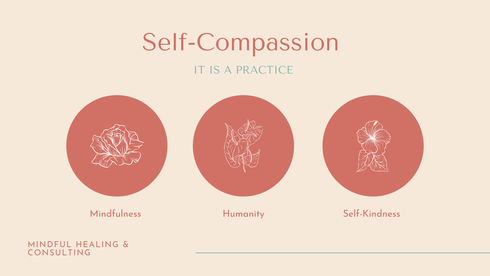 themindfulhealing.org Therapy can also be a space that helps you examine and be curious about how you experience holding a question. Buddhist teachers will encourage this place of learning, arguing that the question itself is more important than the answer that eventually comes. It’s said that in the process of arriving at an answer, we travel through a winding path of inquiry and reflection which can offer rich learning and growth. How can you make more room for holding yourself and your inquiry in compassion? What would it look like to practice a little more gentleness and patience? For support in your journey as you explore questions big and small, reach out to your support network and contact Mindful and Multicultural Counseling in Ewing, NJ at [email protected] to learn more about our services.
By Taryn Chase, MA, LPC, LCADC, NCC  annualreviews.org One year ago, this was the last “normal” Saturday night we would have. I had just picked up my brand new car from the dealership and was sitting at home having sushi and watching a movie. Flash forward one year later, and it’s a much different world. We heard the name COVID-19 or Sars-Cov-2 in other areas of the world and the country, but none of us thought this would become 12 months of working from home and socially distancing. In the wise words echoed over social media, we are one year into a two week isolation period to flatten the curve and decrease the surge of cases. One year into quarantine, so much has changed, and yet nothing has changed. Vaccinations and tests are readily available for some, but not others. As a therapist, this last year I have seen an increase in the number of people, both in my personal life and professional life, struggling with depression and anxiety as well as substance use issues. Social isolation has increased tremendously. In pre-pandemic life, we always suggested that people join groups or spend time with friends and family to try and distract themselves from their pain. During pandemic life, it's harder to do that. As someone who usually keeps a small circle, it’s been hard to build and sustain friendships in general, and now we've very much had to depend on technology to see and talk to people. I am in front of a computer approximately eight hours a day conducting telehealth sessions, and its caused burn out for me as well as others. We as people have been craving contact with others face to face. I hear it from my clients all the time. People are trying to balance their desire to live their lives, be safe, and have consideration for others. We are finding ourselves at a crossroads with our values not matching our actions. We have a choice to make when it comes to where we go from here. Over this last year, our reliance on alcohol and other substances to cope has increased dramatically. Beer and wine sales have increased 21%, and liquor sales have increased 24% according to Nielsen’s Marketing Data. Last year I wrote about drinking in the initial phase of lock down here in New Jersey. The data proves that we're buying and consuming much more alcohol than we have in previous years. In an interview with NPR, Dr. Lorrenzo Leggio, a researcher with the National institute of Alcohol Abuse and Alcoholism, stated that, "We know from previous traumatic events, Katrina and 9/11, people who survived some of them developed alcohol use disorder relating to the increase in stress." He continued, "Long after the pandemic passes, people will struggle with patterns of excessive drinking and addiction that start now while they're isolating at home," (link to this interview can be found here). We have seen how easy it is to use alcohol and substances to cope, and I have talked to many people who use it regularly to help them feel better or to relax at the end of the night. I often ask my clients, whose use might be problematic, how their use is benefitting them and how it’s affecting their ability to achieve their goals. Sometimes it's not affecting them, and other times it is. I think it’s important to look at the reasons why we're using. We all have our own reasons, and we should see if we can find healthier ways of coping so we don’t become dependent on a substance. It’s important to note that the only person who can say if you have problematic use and/or a substance use problem is you. If you or someone you know has a problem with their use, please reach out for help through therapeutic services at 1-844-276-2777 to speak with a care coordinator and get connected with a treatment provider close to you. If you are looking for online meetings, please visit smartrecovery.org/, NA.org, or AA.org. As we move into this next stage of working from home and social distancing, we need to work on continuing to be safe with how we cope with our feelings of stress, anxiety, and depression. We need to practice our self-care strategies more and more as we move into this next phase of pandemic life. To learn more about Mindful and Multicultural Counseling (located in Ewing, NJ) and receive support, please reach out to [email protected].
1/25/2021 2 Comments Let Sadness Be Your GuideBy Emily Suzuki, MA, LAC  @path on facebook.com Have you sat and really considered your relationship with sadness? I found myself pondering this question recently. On a run, I wondered why lately I had been feeling stuck and unmotivated to write, an activity that I usually love. On the surface, I was feeling frustrated with what seemed like writer’s block. I was repeatedly avoiding it, putting it off for a later time, and feeling resentful of the task. As I named the frustration, I felt a softening, and uncovered another emotion. There, waiting and ignored, somewhere in my body, was sadness. In conversation with clients, a similar process often unfolds in a session. Clients come to therapy and share their stories in which anger shows up in relationships, difficult communication patterns, injustices and racism, stress in work, home, loss, and change. Anger, frustration, and resentment is noticeable, sometimes even palpable. When examined more closely or from a different angle, we might reveal what we are working so hard to hide or protect. After all, anger is our body’s very wise and primal instinct to defend against threat and survive. Sometimes, though, it can get in the way of identifying deeper emotions. When there is anger or frustration, sadness is not far away. Sadness is often confused with depression. Depression or Major Depressive Disorder is a common and serious medical illness that negatively affects how you feel, the way you think, and how you act. Sadness, however, is a core emotion and a part of being human. So, why do we fear feeling it so much? At its root, sadness presents when we feel psychological and emotional pain. It is an uncomfortable feeling to sit with. Culturally, we aren’t provided much modeling of or support to learn how to be with sadness. Hence, we resort to doing what feels least painful, often suppressing it with denial or fighting it off with anger. Circling back to my initial question, how is your relationship with sadness? How do you experience it? Do you notice all the ways and times it shows up to point out a hurt that wants attention? Do you make space for the sadness to express itself? If so, how? And how much? Or is it too uncomfortable and unfamiliar? Do you avoid it at all costs? Maybe like me, you fall into frustration or anger, and it takes a little effort and time to peel away the layers to identify the sadness underneath. In my case, I discovered that underneath the frustration was a sadness for not wanting to do something that usually gives me joy. I came across a quote several years ago that centered me around this very idea. It said, there is more joy found in sorrow than in joy itself. This took me a minute to organize in my mind, and still does sometimes, but when I pause, I see its truth. The shadow side of sadness is joy. Through sadness, we mourn something loved, valued, meaningful, or precious to us. As I continued on my run, these words came to me, “follow the sadness, let it be your guide.” Perhaps sadness is there on the surface, or maybe there are many layers needing to be unpacked to access it. However it lives in you now, remember that sadness is human, natural, and necessary in order to truly know and appreciate what it is we value and find joy in. To learn more about Mindful and Multicultural Counseling (located in Ewing, NJ) and receive support, please reach out to [email protected].
by Nathalie Edmond PsyD, RYT-500 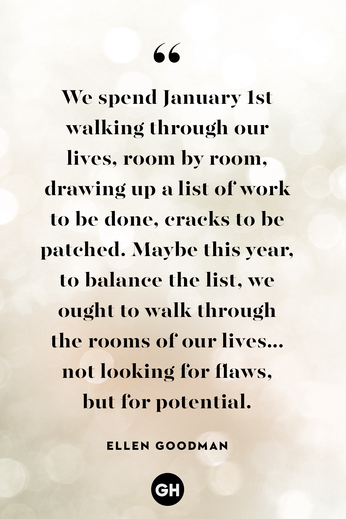 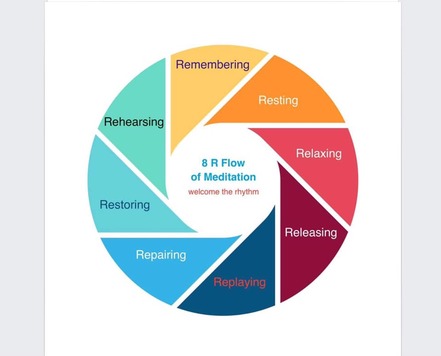 It’s the new year, new season. The world invites you into refocusing your energy and creating resolutions or goals or intentions. Aren’t they all really the same thing; it's just how you approach them? I love the freshness of January or any new season really. It is a time to make a commitment or promise to yourself. You can go down the path of intensity and self criticism if you are less than perfect in achieving your goals or you can see it as information. Perhaps the goal was too big, maybe not right for this time, maybe it doesn’t align with how your nervous system is talking to you. What if you picked an intention instead of a goal? What if you focused on a value you want to deepen or be more congruent with. It could be your guide for a season or the year. If we focus on values and intentions there is nothing to fail. An example could be if you choose to focus on health this year or season. Maybe you meditate on health throughout the year. See opportunities for healthier choices? See where it is difficult to have health and be curious about why that is. A resolution or goal might focus on losing weight or going to the gym. You can see how you can not accomplish the goal of losing weight or going to the gym which might lead to disappointment and giving up on your goal a few weeks into the new year. What if we make small incremental changes in our life or move more towards radical acceptance or a sense of ease or contentment, reconnect to our natural rhythm rather than what we think we should do and be. I am inviting you into deepening your relationship with meditation. A meditation challenge has a tone of goals and you are either successful or not. An invitation is just opening to curiosity about how this may fit into your life and as you practice meditation noticing what arises. Explore the different ways meditation can show up in your life. There are so many different practices out there to help support you. Perhaps you need a few minutes a day of silence or being in the flow of some activity you love. Maybe you want to step onto your yoga mat and do some stretching, intentional breathing, a restorative pose, or sun salutations. Maybe you love the sound of music or chanting. I was leading a seminar a couple of months ago and I asked the therapists in the room what they mindfulness meditation as and this is some of what they said. What is mindfulness? What is meditation?
I love how Lorin Roche, a meditation teacher who focuses on the rhythms of meditation in everyday life, invites us to find a practice that we look forward to. He normalizes that having a to do list while meditating is an act of love. When we slow down what most needs tending to rises to the surface. Perhaps we can heal by addressing what rises to the surface. If we approach meditation as a practice we can't fail. We begin again every time we show up. Every cycle of breath. Perhaps turn your attention to the process, the patterns rather than the outcome. We learn from the past and we move forward more mindfully, maybe with more wisdom and clarity. Learn more about meditation here.. Check out one of the guided recordings or the 7 day meditation invitation on the youtube channel. Every day we explore a different type of mediation practice. Want to move as part of your practice; join our free gentle yoga class the 2nd Friday of the month at 7 pm EST. Register here. Want to do yoga on your own time? Purchase our library of yoga sessions by contacting us. Sign up for our newsletter to keep up with our offerings. Learn more about the team at Mindful and Multicultural Counseling in Ewing, NJ. May you be well. May you feel nourished. May you have not only enough to survive but enough to thrive. 12/17/2020 2 Comments Nourishment During the Winter SeasonBy Abby Fosco  www.pinterest.ph The winter season is upon us, and that calls for evaluating our strategies for nourishment and self-care during the colder months. For many of us, winter time may lead to the winter blues, which can definitely feel amplified with COVID-19 spikes and social distancing restrictions. With less time outside and more time indoors, it's important to find hobbies and coping skills that accommodate the change in season and the COVID-19 restrictions. I interviewed our clinicians at MMC about their tips and strategies for finding nourishment throughout the winter season: Marissa Mangual, MS, LPC
Kristine Aguilar, MSW, LCSW
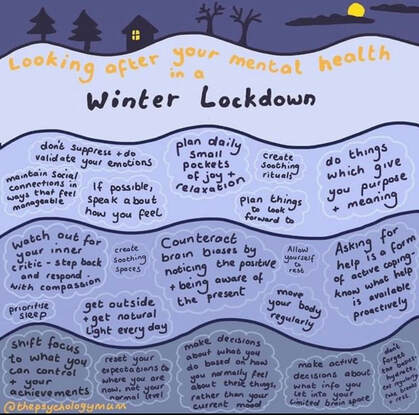 Nathalie Edmond, PsyD, RYT-500 | Founder and Director of MMC
Shashi Khanna, LCSW
As we continue to live through these unprecedented times and each season looking a bit different than it ever has before, nourishment and self-care is more important than ever. If you want additional support throughout this winter season, Mindful and Multicultural Counseling in Ewing, NJ is here for you. Here is a link to our website's main page, and you can reach us by phone at (609) 403-6359 and by email at [email protected]. |
Mindful and Multicultural Counseling Clinical TeamTherapists and psychologists committed to improving well being and mindful living. Archives
August 2023
CategoriesAll Addiction Anxiety Back To School Coronavirus Depression Eating Disorder Fear Meditation Mental Health Mindfulness Radical Acceptance Tapping Teenagers Therapy Transitions Yoga |
 RSS Feed